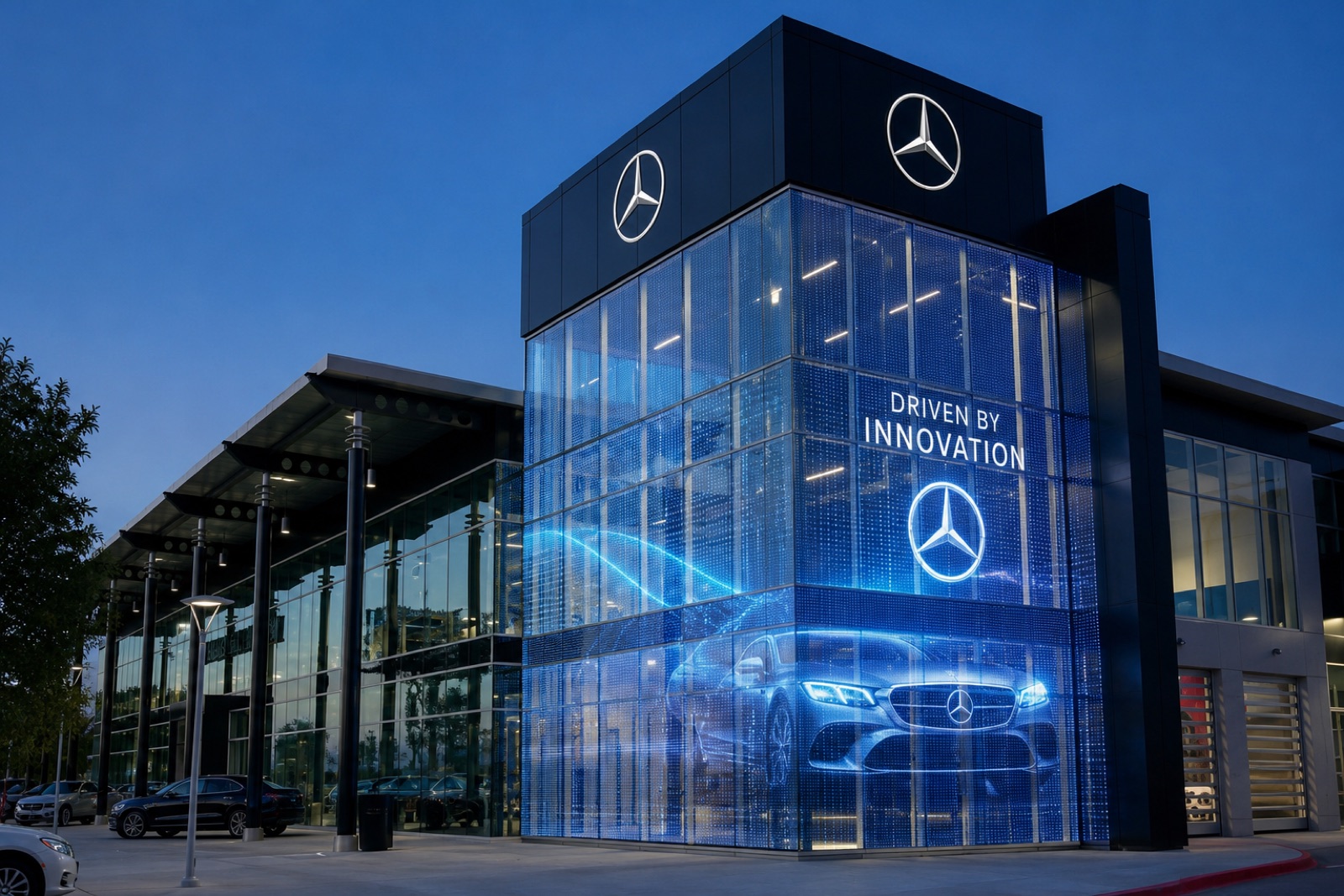
A dealership showroom and a retail flagship share one architectural fact: the most valuable thing about the building is the glass. It exists so people outside can see what is inside. Which is exactly why covering it — with vinyl graphics, posters, or a conventional LED wall — has always been a compromise: every campaign hides the very thing the glass was built to show.
Transparent LED removes the compromise. Content plays on the glazing while the cars, the merchandise, and the interior remain visible through it. Here is what that makes possible — and what to plan for.
The dealership case
The showroom works after closing
A dealership's glass frontage faces traffic 24 hours a day, but the showroom only sells during business hours. With a transparent LED layer, the same frontage can present launch campaigns, feature walk-throughs of new models, and brand films through the evening — while headlights still catch the actual vehicles behind the glass. The building keeps selling after the staff go home.
Launches without construction
Vehicle launches are calendar events: a new model arrives and the frontage should announce it that week. A media-capable glass line lets the launch happen in software — full-height campaign content across the showroom face — and switch to the next campaign with no vinyl crews, no scaffolding, and no downtime for the storefront.
Content that frames, not covers
The most effective dealership content treats the glass as a stage: animated frames around the sightline to a featured vehicle, campaign messaging above driver eye level, brand motion that parts to reveal the actual car. Designed well, the display and the inventory work together — this is why content for transparent surfaces should be composed against the real interior, not on a black preview screen.
The retail case
The window display that changes daily
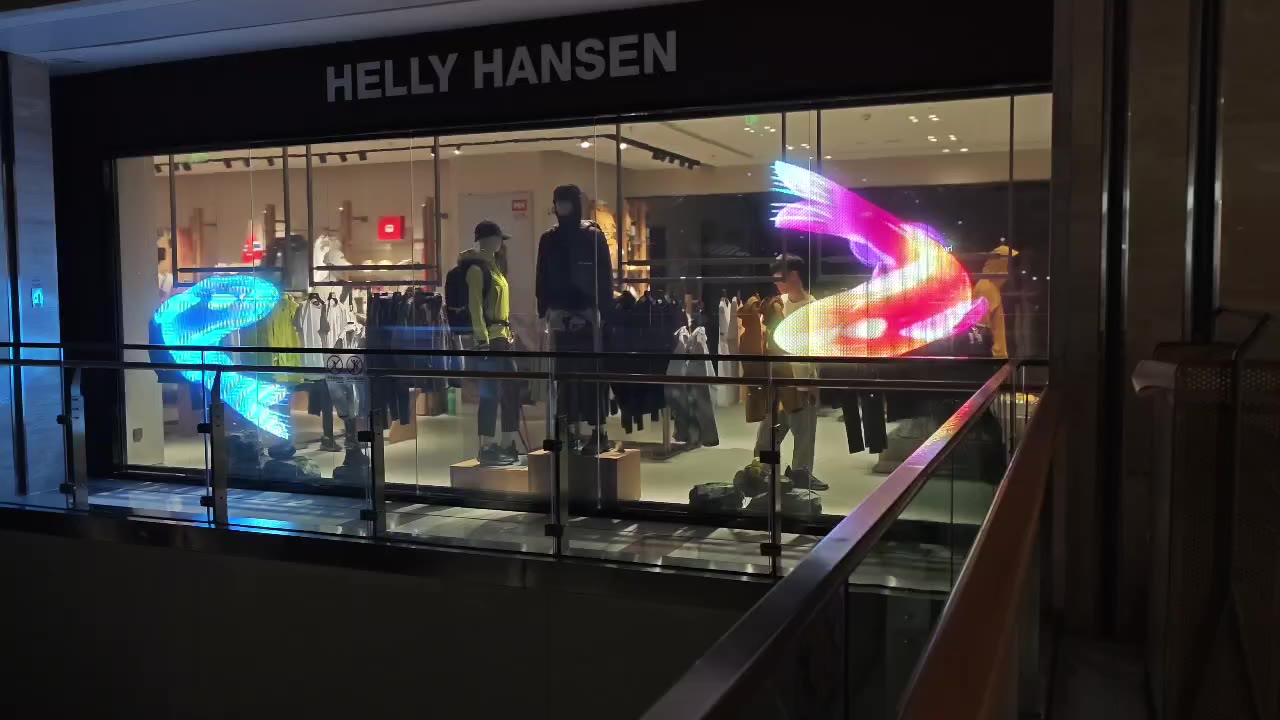
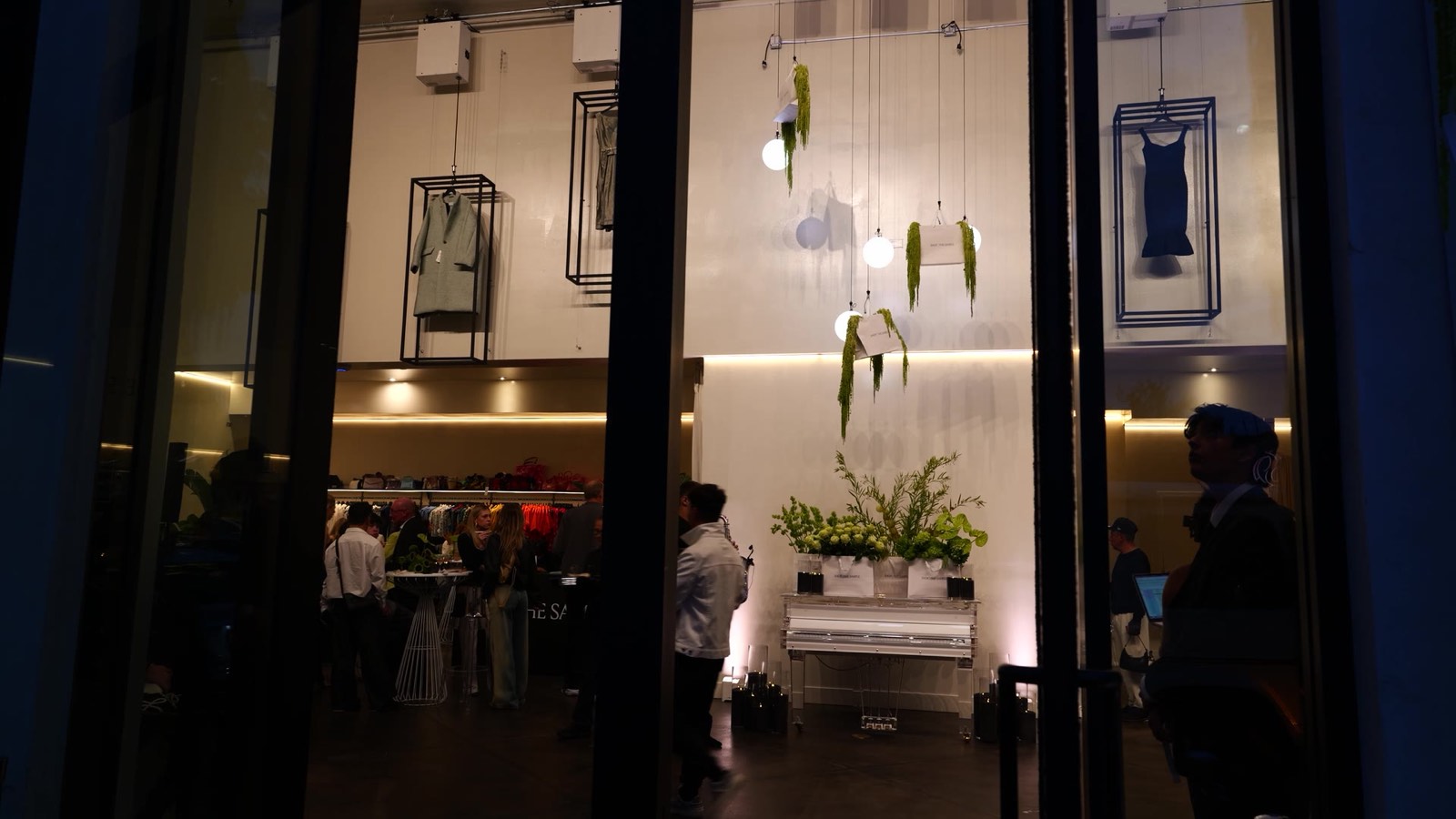
Retail visual merchandising is expensive precisely because it is physical. A transparent LED window keeps the physical display — mannequins, product, staging remain visible — and adds a digital layer that can change with the day: morning campaign, afternoon product story, evening brand film. Seasonal resets that once took install crews become scheduled content.
Attention without opacity
Motion draws the eye; storefronts have always known this. What is new is getting motion and transparency at once. Content can help a storefront stand out on a crowded street while daylight still enters the store and passers-by still see real merchandise — the display attracts attention to the store rather than replacing it.
One surface, many programs
Over a year, the same glass can carry brand campaigns, product launches, collaboration promotions, digital art after hours, and seasonal storytelling. For flagship locations, that flexibility turns the facade into an owned media channel — refreshed as often as the marketing calendar demands, at content-production cost rather than construction cost.
What to plan for
The practical requirements are the same ones we cover in our pre-installation guide, with three accents specific to these applications:
- Sightlines are the product. The system layout should be designed around what must remain visible — the hero vehicle position, the merchandising zones — not draped uniformly across all glazing.
- Daylight brightness matters more here than anywhere. Street-facing retail competes with full sun; systems in the 5,000-nit class keep content readable at noon.
- Local signage rules apply. Street-facing animated content is regulated in many jurisdictions — brightness scheduling and content policy belong in the project scope from the start.
Seeing it on your own building
The fastest way to evaluate the idea is not a brochure — it is a visualization of your actual frontage. That is how we begin: a site evaluation, then concept visualizations of your building with the system in place, clearly labeled as concepts, before any commitment to hardware.
If you operate a dealership or retail location and want to see what your glass could carry, request a site evaluation — bring the address and we will bring the concept.