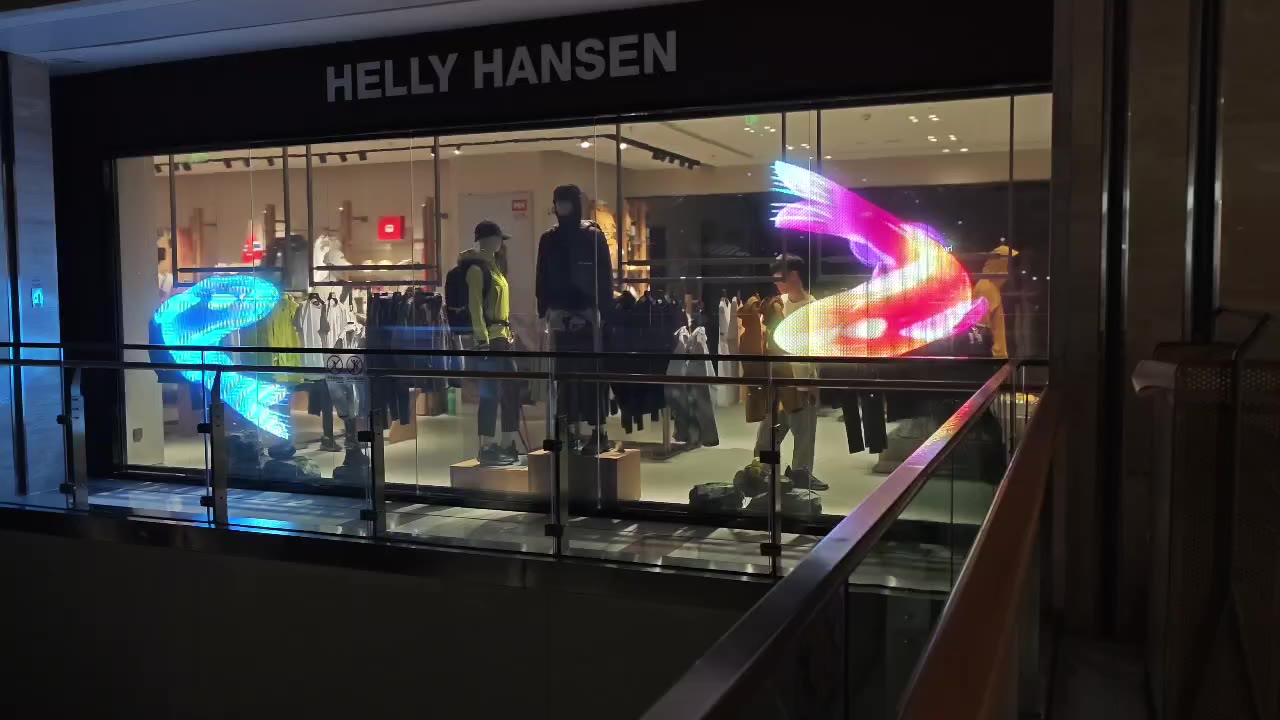
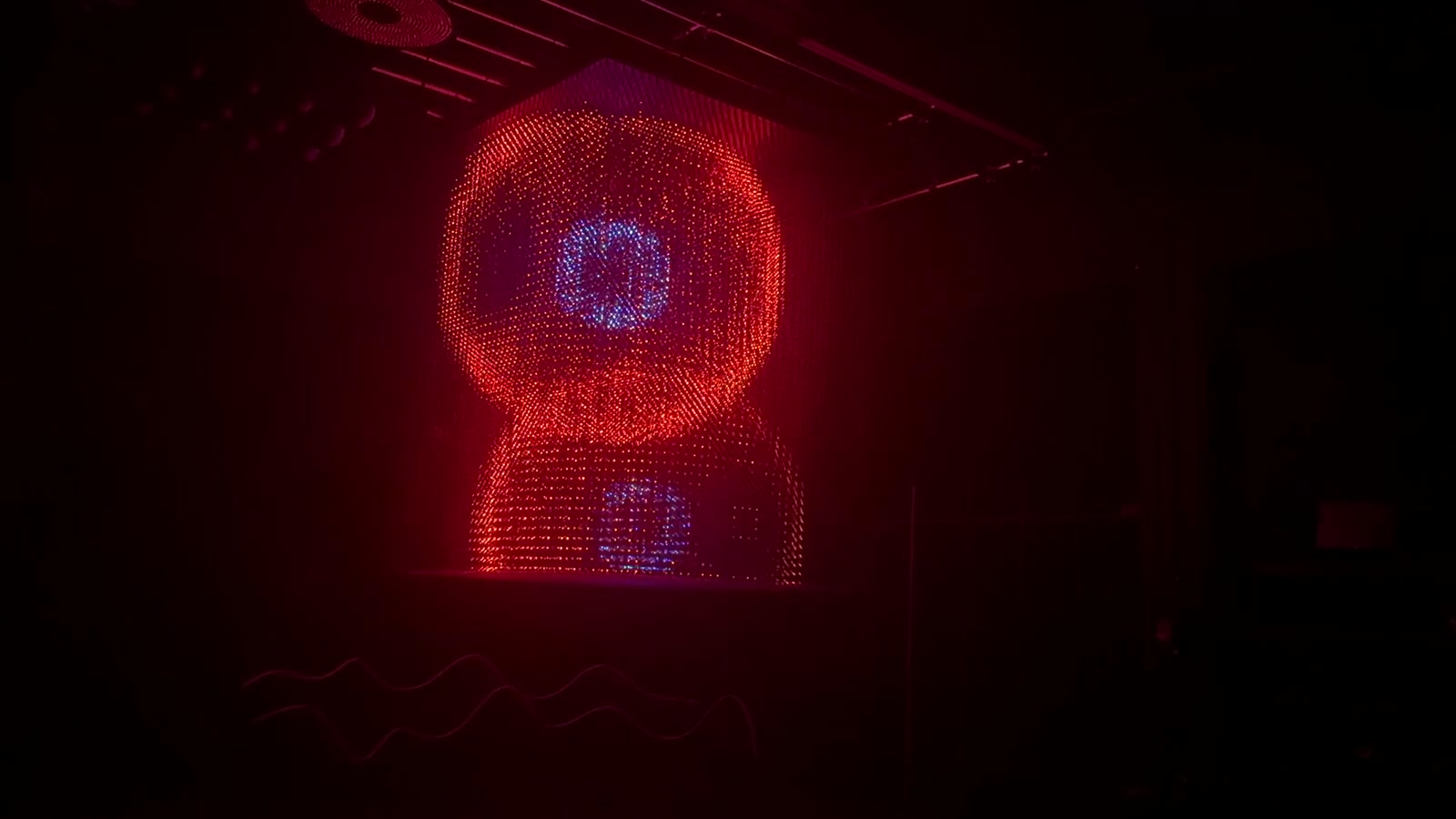
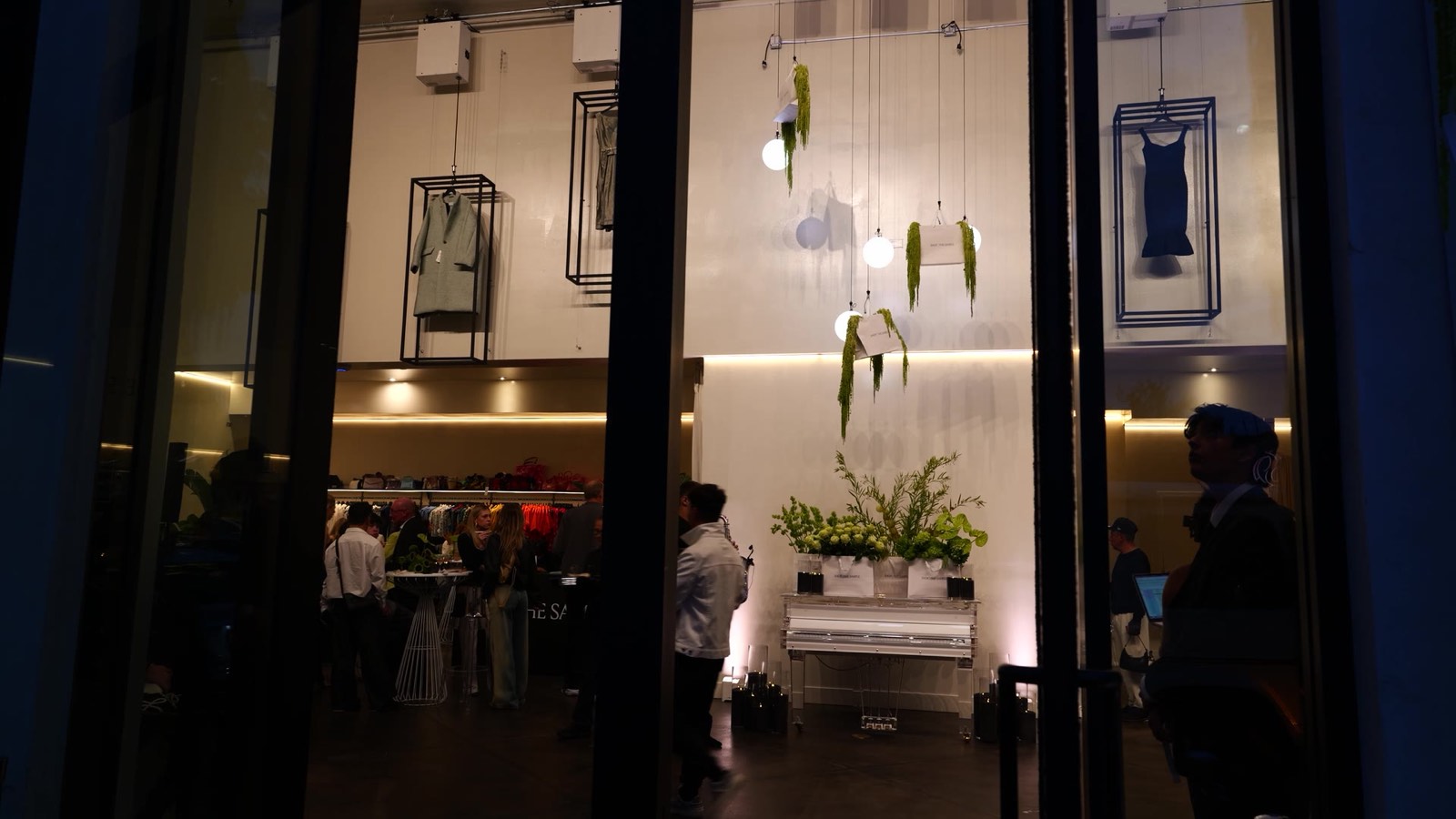

Walk past a storefront where fish appear to swim across the glass while the store stays perfectly visible behind them, and you have seen transparent LED working as intended. What you cannot tell from the sidewalk is which of two quite different technologies you are looking at — and if you are considering an installation for your own building, that difference matters more than any other specification.
This guide explains how transparent LED film and transparent LED mesh actually differ, and which building conditions favor each.
What transparent LED film is
Transparent LED film is an ultra-thin, flexible layer of LED pixels carried on a clear substrate. It is applied directly to existing glass — laminated to the surface or mounted flush against it — much closer in spirit to a high-performance window treatment than to a traditional display.
Because the film becomes part of the glazing itself, it is the least visually intrusive option when the display is off. Up close, the pixel conductors read as a faint tint on the glass. For interior glass partitions, retail display cases, and storefronts where the architecture must stay pristine, that discretion is the core advantage.
Film favors curved and irregular glass as well. Since it flexes, it can follow bent glazing that rigid systems cannot — display cases, rounded corners, and glass enclosures.
What transparent LED mesh is
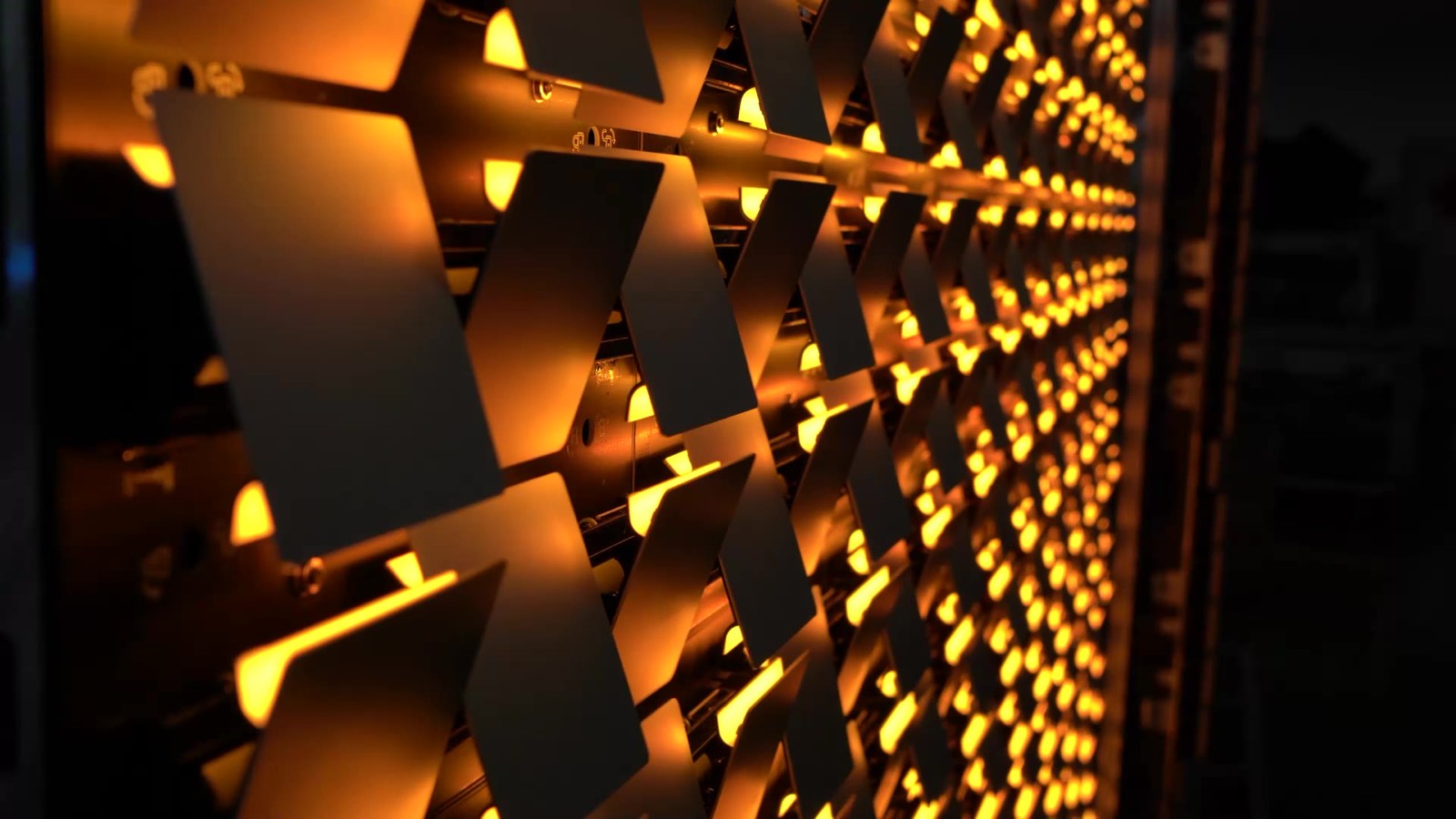
Transparent LED mesh takes a different approach: thin horizontal LED strips are held in an open lattice, leaving most of the surface literally empty. Air, light, and sightlines pass straight through the gaps between strips.
Our own mesh series illustrates the typical construction: modules roughly 3 mm thick, weighing about 3 kg per square meter, with visual transparency above 80% — light enough to mount onto existing storefront glass and curtain walls without rebuilding the facade. Because the strips carry larger, more powerful LEDs than a film substrate can, mesh systems reach substantially higher brightness — ours runs at 5,000–5,500 nits, which is full direct-daylight readability.
Mesh is modular. Individual strips and modules can be serviced or replaced without removing the whole installation, which matters over a service life measured in years, not seasons.
The five questions that decide it
1. How bright does it need to be?
If the display faces the street and must compete with afternoon sun, brightness is the deciding factor, and mesh leads. Interior applications — display cases, atrium glass, partition walls — live comfortably within film's range.
2. How close will people stand?
Film typically offers finer pixel spacing, so it holds up at close viewing distances. Mesh systems like our P6.25 series are designed for viewing from roughly five meters and beyond — ideal for facades and large storefronts, less suited to glass people press their noses against.
3. What is the glass situation?
Flat, accessible, existing glazing suits both systems. Curved glass favors film. Very large exterior surfaces — full facades, multi-story glass lines — favor mesh, which scales module by module and services more easily at height.
4. Who maintains it, and how?
Mesh's open modular construction means a failed segment is a service call, not a reconstruction. Film's integration is its beauty and its constraint: it behaves more like glazing, so planning for access and replacement belongs in the design phase, not after.
5. What does "off" need to look like?
Both technologies preserve transparency, but they read differently when idle. Film almost disappears into the glass. Mesh reads as a fine architectural texture — many clients like the technical elegance; some architects prefer the invisibility of film. This is an aesthetic judgment worth making in person, with samples, on your actual glass.
The honest answer
Most projects we evaluate resolve within the first site visit, because the building itself usually decides: viewing distance, sun exposure, glass construction, and serviceability rarely leave both options equally matched. And some projects genuinely call for a combined approach — film on the close-range interior glass, mesh on the facade.
That evaluation is the first thing we do, and it costs you nothing: request a site evaluation and we will tell you which system your building actually wants — including when the answer is "neither, and here is why."